

It is no secret that there are some incredibly fashionable people around campus, in particular in the arts complex. Rolling out of bed to my 9 am seminar to be surrounded by well-put-together, perfectly thought-out yet effortlessly cool outfits that look as if they have come straight out of Pinterest; it makes me question my own wardrobe. Do these people just possess a sense of style and taste when it comes to fashion? It has become a sort of trend to be ”individual” in what you wear, to express part of who you are and feel comfortable in your clothing. But so much of what we do wear, and the outfits we see that we consider “individual”, are shown to us online by influencers, celebrities or Pinterest boards.
So then, at that point, is it even individual at all?
It makes me question: if personal style is influenced by what we think we are “supposed” to like, then how are we to fully know that what we wear is truly our own?
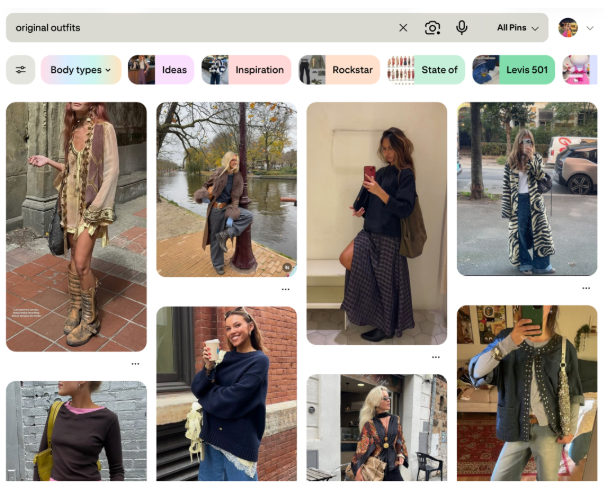
If we think of trends such as “clean girl” or “cool girl” (what even defines any of these, by the way?), it becomes easier, with the help of social media, to sort of build your identity - how you present yourself and what you therefore wear - around this label. This is a starting point as to where our taste may come from. I decided to type into Pinterest ‘original outfits’, and what came up on my feed was patterns, the familiar long coats and boots combination and, honestly, outfits that I would personally wear in a heartbeat. But I feel the concept of searching for ‘original outfits’ takes away the whole originality concept.
I then searched ‘clean girl outfit’, which presented me with neutral, plain clothing with the odd colour here and there but nothing clashing; no patterns, or anything particularly “out there” clothing-wise.
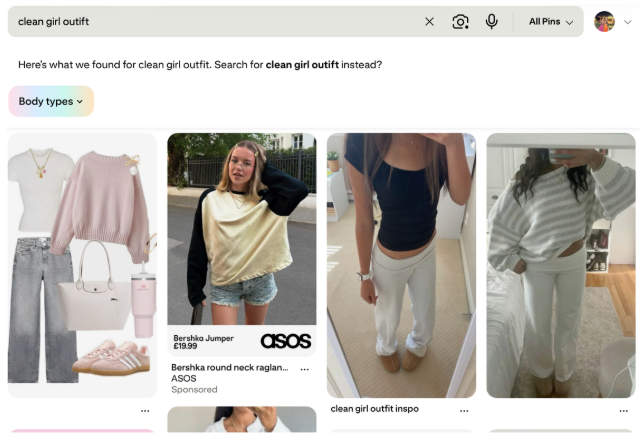
I lastly typed in ‘cool girl outfit’, which showed me similar clothing to the first two searches, but with excess jewellery, maybe some glasses or your hair in a cool, put-together bun. The difference between all three of these categories is minor, however it is interesting how trends - and in this case the Pinterest algorithm -group certain outfits together, creating categories and, honestly, potential competition.
I think it is also important to highlight that these “aesthetics” all seem to be “girl”-focused. In a way forcing women to decide, or fashion to decide for them, which “girl” category they fit into to express their femininity. Surely, the whole point of being a girl, or any gender identity for that matter, is to not fit into a category or a label. But this then brings us back to questioning if standing out in what you wear is actually standing out, or conforming to a trend that was put there to help oneself to feel different.
I do believe, however, that these different aesthetics of outfits can be inspiring and a bit of fun. Fashion trends have always existed, as has following them. They can make individuals feel part of a community and be a cause for positive movement and change. What comes to mind is Vivienne Westwood’s punk movement, where she intended to debunk the idea that clothes were just there to make women look sexy. Her famous quote “The only reason I am in fashion is to destroy the word conformity” reflects her outlandish designs for the time.
But there is also the side that makes it feel as if there are invisible rules to follow when expressing our individuality. The desire to be original in what you wear has sort of become a trend itself, which is beyond ironic.
I suppose you cannot know how someone developed their taste in fashion by simply looking at their outfit. Maybe they are experimenting with a trend or trying something new. Also, maybe having your own taste in fashion isn’t what makes you original; it is knowing what you like to wear and why you like to wear it. Could it be mixing trends rather than just following one or avoiding them altogether? Or finding a trend you feel you align with?
Perhaps being original is just wearing what most feels like you.
words by Phoebe Meadwell
