

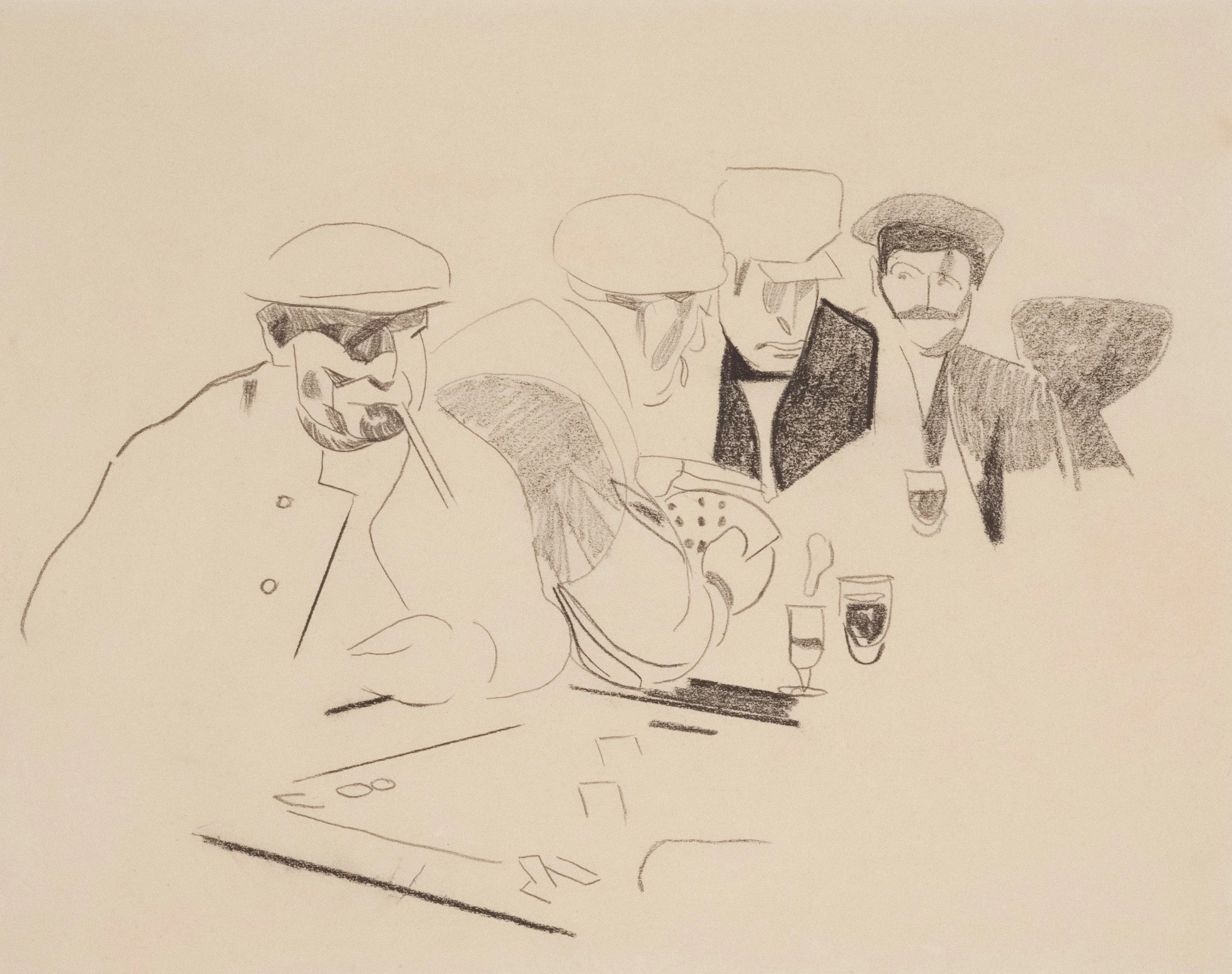
João had the ace of spades tucked firmly between his toes.
My coworker Isaac and I looked at each other and burst out laughing. “What is he doing? Is that actually a card?”
We were playing Truco, a South American card game, with two Brazilian students, and somewhere along the way João had decided that the best place to hide a playing card was between his toes. I had absolutely no idea what was going on which, to be honest, had been my default state of mind all summer.
That summer, I was working in Torquay teaching English to students from all over the world. In the evenings, after long days in the classroom, students and teachers would hang out together and, more often than not, someone would produce a deck of cards. Then came the inevitable question: “Do you know this game?” Usually, I didn’t. Truco, Briscola, President, Choh Dai Di; I ended up learning an unreasonable number of games whose names I could barely pronounce, let alone remember the rules of. Someone would explain what sounded like a straightforward set of rules, everyone would nod, and I would smile and nod along. Then the game would start and I would instantly realise that I had understood nothing.
Up until that point, I’d always assumed cards were universal. A deck had 52 cards, four suits, a logical order, and that was essentially it. I had never considered that my idea of a deck was just one version, not some international law. That assumption shattered the day I was introduced to Italian cards. Suddenly, there were goblets, swords, coins, batons and only forty cards in total. Sitting at the table, I realised how easy it was to mistake the familiar for the universal.
Every game came with its own little world. You could learn the official rules and still miss half of what was actually happening. There were subtle facial expressions that gave people away and pauses and gestures that carried hidden meanings.
Learning a card game was a bit like learning a language without a textbook. You watched. You copied. You got things wrong. Occasionally, you lost spectacularly.
Eventually, you begin to read between the lines.
I started to get very good at spotting a bluff before understanding the words accompanying it. I couldn’t always follow the dialogue, but I began to understand how people played, and how they communicate when words fell short.
Which brings me back to Truco.
Truco was loud, competitive, chaotic. It involved bluffing, shouting, dramatic gestures, and, apparently, quite a lot of creative anatomy for card storage. João’s card between his toes was hilarious because no one needed to consult a rulebook on the acceptable use of feet. He knew what he was doing, we knew what he was doing, and the shared absurdity of the moment transcended any language barrier.
Looking back, I don’t remember every hand we played that summer, nor do I remember all the complex rules of Truco. But what I do remember is that card between João's toes.
To me, this made it obvious that knowing the rules and understanding the game are two very different things. You can spend hours on Quizlet revising vocabulary and still miss the joke. Conversely, you can understand almost none of the words but still understand what’s going on. In fact, most of the communication took place between the words: a look exchanged across the table, a sudden pause or the collective laughter when someone managed to pull off an incredible bluff.
When we encounter another culture, the real discovery isn't just that other people do things differently; it’s realising that our own way was never the default. We grow up with rules that become so familiar we forget they were ever learned. But put a room of strangers around a table with a deck of cards, whether 40 or 52, and everyone becomes a beginner again.
The cards themselves may be the same shape, but the game always belongs to the people playing it. And sometimes, apparently, to João’s toes.
words by Maddy Dodwell
