

Spoilers ahead.
On the 10th of October, I was lucky enough to see Sam Pollard’s new documentary Tutu (2026) at the BFI London Film Festival. The film traces the life of Desmond Tutu, the South African archbishop and Nobel Prize winner who became the voice of the oppressed during apartheid, driven by his faith and hope.
With Trevor Noah behind it, I sensed that this was a film made for our current times, and the opening confirmed this. Archival footage of South Africa’s political unrest cuts to Tutu receiving his Nobel Prize, to then showing him leading demonstrations for basic rights, establishing him as the film’s hero before the title has even appeared. Right away, I understood it would centre on the conversations we are having today about human rights violations around the world.
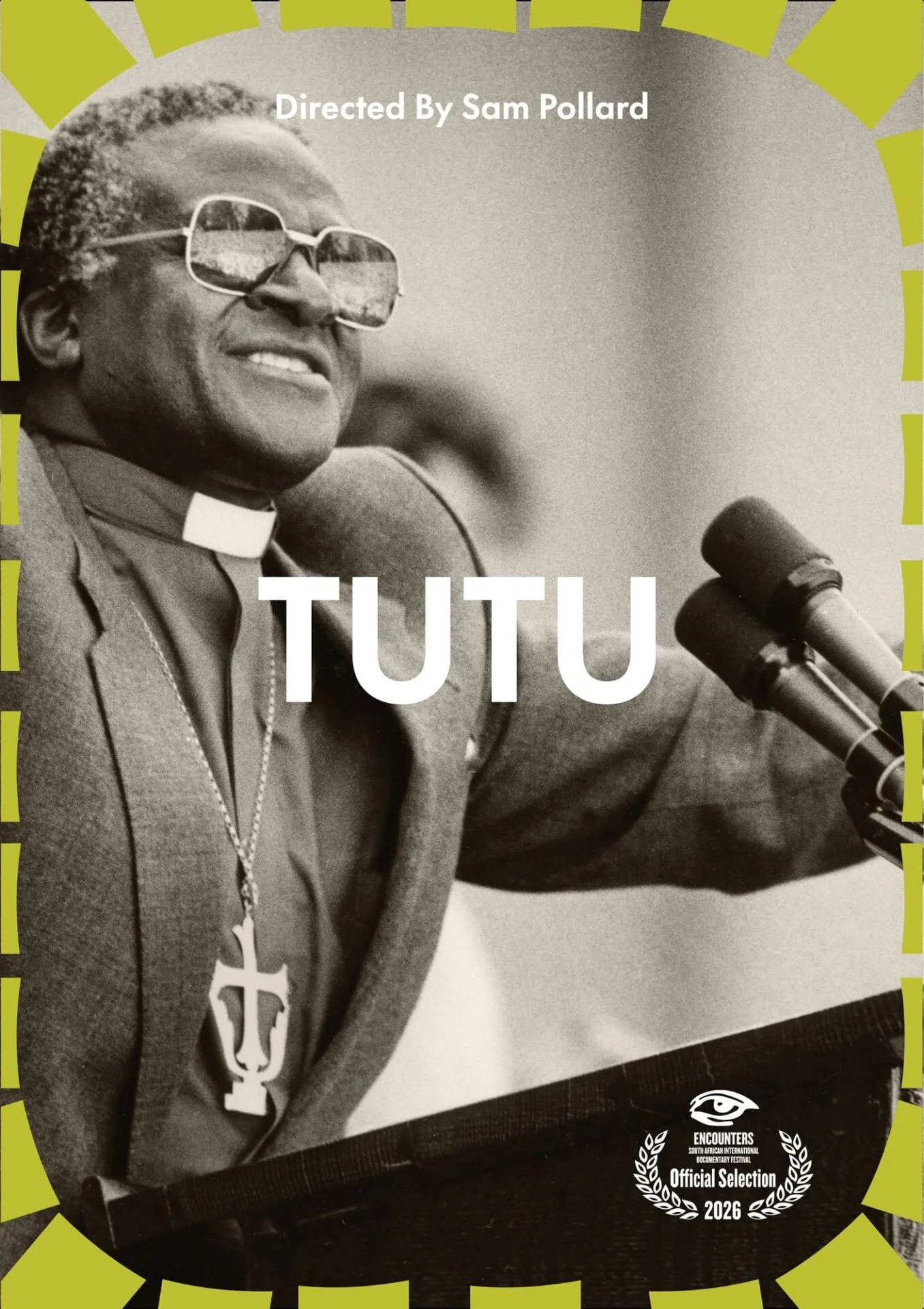
Tutu, directed by Sam Pollard.
The documentary is built around footage shot by Roger Friedman and Benny Gool, who filmed Tutu for almost two decades both in his most personal moments and his fight against injustice in the apartheid state. At first, this made me slightly sceptical. There was archival footage of unrest, a prologue summarising his achievements, the highs and lows of his career with a soundtrack suggesting the audience on exactly what to feel at each moment. It felt like a typical high-end Netflix documentary and I worried it would become predictable. Yet, as the documentary progressed, the more human moments appeared such as family celebrations, birthdays and the filmmakers being treated as Tutu’s own children.
However, what I enjoyed most went beyond the form of the documentary. The film strikes a careful balance between glorifying its subject and showing Tutu’s controversies, centring on the tension between his religious calling and his deep involvement in his country’s political transformation. A series of quotes traces this evolution, from Tutu describing himself as a “man of peace but not a pacifist” to his later fury at Margeret Thatcher and Ronald Reagan for refusing to impose economic sanctions on South Africa (Tutu, 2026). Responding to Reagan’s 1986 speech rejecting them, he told an interviewer: “I think, the West, for my part, can go to hell” (Ibid).
This, I believe, is where the film gains its value. The delicate interplay between religion and politics, told through a man who brought justice through peace alone and became one of the most influential figures for human rights advocacy and the fight against apartheid. Politicians and public figures debated whether religion and politics could intersect, as Tutu defined himself as a “priest of the church not a political party”, while his critics accused him of “politicising the church too much” (Ibid).
The film never fully resolves this tension. Instead, it shapes its narrative around a central idea, the “redemptive power of forgiveness”, which even becomes the hero’s slogan before the title appears on screen (Ibid). I admire that the way the theme is later revisited in the film, tested rather than simply asserted, lending it real nuance. Rather than simply glamorising Tutu or reducing him to his achievements, the film poses a question that outlives both the man and the screen; how far should forgiveness go?
That is the question that stayed with me. Is there a limit to what can reasonably be forgiven? Tutu became the figure of post-apartheid forgiveness, listening to the stories of both perpetrators and victims and insisting that no one is inherently evil. The film even includes footage of the filmmakers themselves disagreeing with some of Tutu’s acts of forgiveness, among them his willingness to forgive Hitler. It offers no easy answers, only harder questions.
The film then closes by linking his legacy to the present, tracing Tutu’s later support for other human rights movements. Its final image is a black screen and Tutu’s near whisper, “God bless you”, addressed directly to the audience (Ibid). The screening room rose in a standing ovation, with tears throughout. Many of those present were South African, witnesses to these times, and in the Q&A afterwards they thanked the makers for telling this story.
So yes, I do recommend it. Tutu borrows the shape of a familiar hero documentary, but it never lets its protagonist adopt the mantle of sainthood, and that’s where it earns its strength. It asks what compassion can truly achieve, and then leaves us with the hardest question; can we forgive the unforgivable?
words by Chiara Sainz Lipscomb
Tutu. [film] Dir. Sam Pollard, HiddenLight, Universal Pictures Content Group, 2026. 101 mins.